This year's local organiser for the 13th EURIPA Rural Health Forum is the Lincoln International Institute for Rural Health (LIIRH).
The Lincoln International Institute for Rural Health (LIIRH) was established in April 2020, as a bold new initiative by the University of Lincoln, to conduct placed-based research addressing the unique health challenges experiences of dispersed, rural communities locally, regionally and globally. The purpose of LIIRH is to improve the health and wellbeing of rural, remote and coastal populations. Through collaborative and innovative approaches to research, whether these are applied to local or international contexts the institute seeks to design, build and evaluate effective, inclusive and sustainable models of care. At the institute we have a commitment to include communities and people in research and knowledge exchange that is regionally relevant and addresses contextualised challenges. Strategic and practical leadership alongside translational, context-specific knowledge production and exchange supports actionable high fidelity healthcare solutions in real world contexts.
Our vision is to become the preeminent rural health institution worldwide with a mission to conduct world-class research addressing the unique health issues facing rural communities locally, nationally, and internationally. The institute brings together world-leading specialists, conducting research across a range of rural health related concerns, ranging from infectious disease epidemiology, oral health, and emergent response analysis through to sustainable remote health care delivery solutions. Prof. Mark Gussy and the LIIRH team have developed their collaborative research strategy for rural and coastal health in line with the university’s purpose of transforming lives and communities for the better. LIIRH has established strong local and global partnerships, which actively support a research and innovation ecosystem which is developing sustainable healthcare solutions for rural and remote communities around the globe. As a center of excellence in rural health research, the LIIRH sets out to conduct high-quality innovative and sustainable glocal research, recognising that the unique challenges faced by rural populations ultimately require collaborative approaches to fully address the multi-faceted population health challenges and inequalities.
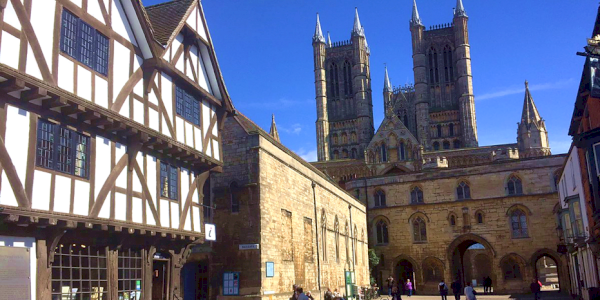
Since the initial launch of LIIRH the needs of coastal populations in Britain have been surfaced, with CMO Professor Chris Whitty addressing these challenges in his 2021 annual report. Over the past two years researchers at LIIRH have worked in close partnership with rural and more isolated communities on Lincolnshire’s east coast to identify and understand complexities of supporting healthcare and wellbeing in these places. Prof. Mark Gussy’s international work has focussed on understanding the causes of the health inequalities which he has witnessed among different communities globally. With a clinical background in oral health Mark applies his philosophy on situational analysis of health care inequalities stating:
"Disease expresses itself in a similar way whatever country you are in. It’s the burden of disease that changes dependent on location and that is related to political economy and healthcare structures."
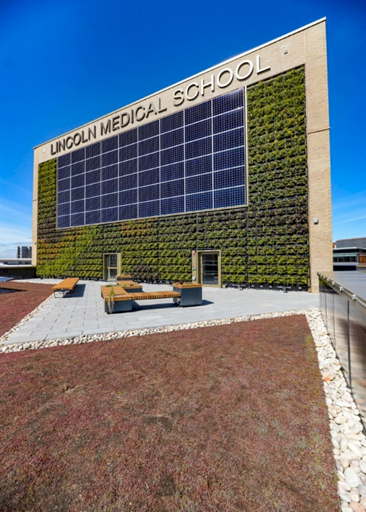
On April 20th, 2021 the LIIRH team moved into its prestigious research and office suite on the third floor of the new Lincoln Medical School. Researchers and students benefit from newly constructed modern office spaces located on the third floor of the Lincoln Medical School, situated in a primary location at the centre of University of Lincoln Campus. The LIIRH office facilities within the Lincoln Medical School are generously funded by the Greater Lincolnshire Local Enterprise Partnership (GLLEP) and the Wolfson Institute. Situated close to the picturesque Brayford Pool waterfront within the University of Lincoln’s striking city centre campus, the LIIRH is a multi-disciplinary research institute whose staff, partners and students work across ranging disciplines within the fields of biomedicine and health sciences.
The institute enjoys newly appointed integrated facilities, from which it provides a focal point for research, training, and community engagement, devising and providing solutions to the challenges of delivering health care and improving population health in rural settings.

The Lincoln Medical School is a high-quality 5,682m2 integrated clinical facility that is driving skills development across the fields of medicine and allied health subjects, providing the platform to grow the scale and diversity of existing provision from professional development to post-graduate qualification. The space comprises teaching facilities across five storeys, encompassed within a highly sustainable and environmentally friendly building which includes over 200 photovoltaic panels, a living wall system and innovative hybrid heating and cooling systems. The Lincoln Medical School has been built on the main Brayford Campus to maximise the opportunities and experience for learners and access to the established research base, creating significant economies of scale. The centre delivers integrated specialist spaces for clinical and professional development as well as research and innovation activities.

Global Professor of Rural Health, Director of the Lincoln International Institute for Rural Health.